

With the evolution of digital ecosystems, there is a greater dependency on microservices for organizational agility, modularity, and scalability. Microservices architecture deconstructs formerly one-piece systems into individual services, thus allowing each to develop at its separate pace, freeing up any potential bottlenecks and upgrading progress across the board. A headless CMS operates with microservices in mind with its API-centric framework that separates the content and presentation portions of creation and eliminates the downsides of a monolithic structure. Utilizing a headless CMS within a microservices architecture improves content delivery and ensures interoperability of the network and system with greater resilience and responsiveness. Ultimately, a greater understanding of these technologies separately and how they empower one another is key to digital ecosystems of the future.
Why Microservices And Headless CMS Go Hand In Hand
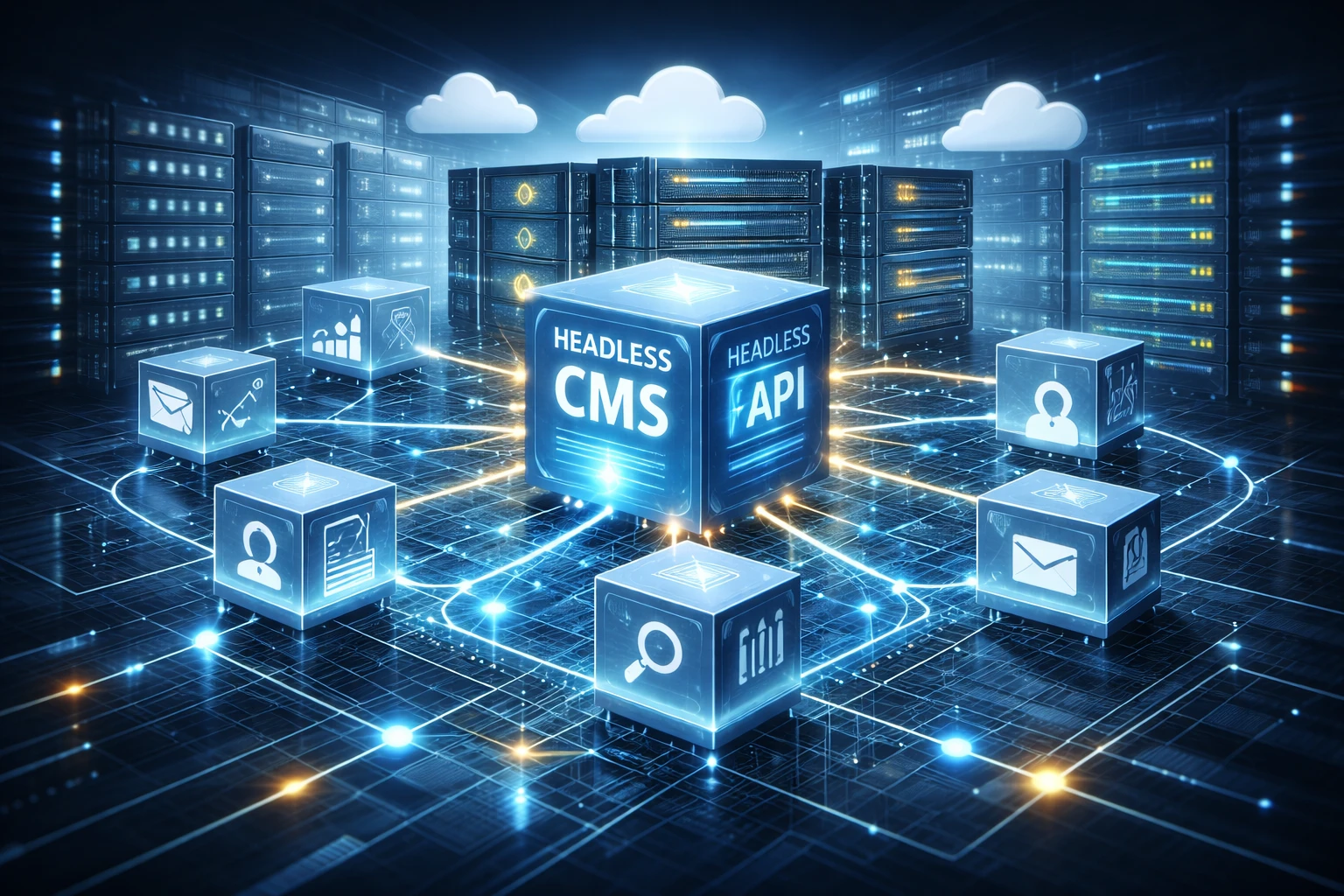
The architecture behind microservices and a headless CMS is the same: decoupling. A microservices architecture takes larger applications and separates them into smaller, individual services that do what they’re supposed to independently though they may come together for an overall function. Likewise, a headless CMS decouples content creation and storage from deployment and presentation. Headless CMS for developer flexibility becomes especially evident when these two systems operate together, providing a highly flexible, scalable environment where services can evolve independently. When these two systems operate together, they provide a highly flexible, scalable environment where both respond and operate independently yet integrate via API calls where necessary. The headless CMS acts as one of the content microservices and provides structured data to whatever interface needs it at any given moment. Less dependency increases deployment opportunities, which means one service’s updates or redeployment doesn’t have to disrupt the entire application ecosystem. As businesses grow digitally, the coupling of microservices and headless CMS becomes necessary for speed, stability, and ever-growing opportunities.
How APIs Provide a Content-Centric Communication Layer
Within a microservice architecture, each service must communicate, and therefore APIs are built to share content with one another; a headless CMS is no different. Through REST, GraphQL, or custom endpoints, the CMS is an expected factor to feed other applicable services consistent data output with predictable access. Content becomes interchangeable between front-end frameworks, personalization services, search microservices, and analytics, whereby these front-end solutions can only grab the structured data they need without redundancy. API-like communication between systems means that CM and appropriate content orchestration occur for real-time output opportunities, automated workflows and digital layering of possibilities. With a headless CMS as part of a microservices architecture, content-centric needs can get rendered immediately based on service request.
Content Needs To Be Structured For Service-Centric Use Over Presentation
Content that’s necessary for a headless CMS to operate within a microservices structure should be structured based on service-centric use. A microservices architecture requires more modularity than inter-connectedness; therefore, structured content models based on fields, components and relationships allow services to fetch data without having to rely on presentation formats. This ensures that retrieval is based on needs – providing a mobile app data set versus a product catalog access for AI personalization engines. When content can be organized as more data than a page, it makes sense for use across channels and future microservice environments. Therefore, integrating a CMS within a microservices structure vastly benefits from this ease of operation over time which limits operational overhead in the ecosystem.
Stabilizing in an Unstable Environment
Microservices are all about failure, updates, and scaling independent components without overarching system connection. This microservices advantage is experienced similarly within a headless CMS for the separation of content, content, and delivery systems, a back-end update on the CMS or maintenance CMS instance can go without the front-end of the headless CMS or other microservices utilizing the headless CMS via API being negatively impacted. Similarly, if a microservice must take precedence over another for two hours due to higher demand, it does not take down the rest. The same stabilization effort occurs since everything works independently with only indirect limited access to the headless CMS. The more independent parts exist, the less one faction can negatively impact the others, fostering a much more agile digital ecosystem where even if it’s not stable, the larger players stay functional due to failover or extreme demand. It’s a risk in an unstable environment that components fail but it’s worse to allow components to fail others in an unstable environment for longer than necessary.
Expanding Digital Experiences Across Multiple Channels
Microservices boast a specialized architecture for scaling but combined with a headless CMS, digitized options expand across channels since there’s no need to duplicate developments or create multiple CMS environments for multiple channels. Each digital experience can rely upon a single source of truth for content and that’s what a headless CMS provides. Therefore, a web application, mobile application, smart technologies, kiosks, gateways with APIs, all exist with data consumption from any who need it and each microservice can render that information as it needs to be rendered. This is advantageous for organizations looking to pursue international initiatives or companies with subbrands; headless CMS expansion leaves expansion options available without hassle at an expansion level. What would typically take far too long to determine for scaling inherently exists by the very aspect of microservices connecting to a single source of truth for rendering opportunities; it’s easy to scale without complication. Expansion would naturally make sense.
Improving Developer Velocity and Reducing Internal Bottlenecks
Companies that want modern solutions often get bogged down by monolithic legacies which naturally prevent developers from getting caught up in template limitations, forced plugins, and fixed back-end situations. However, those who understand microservices and headless CMSes recognize that developers won’t get bogged down trying to work around everyone else’s ideas. They each are given a single source and no one gets complexed by integration concerns. For example, a front-end developer can adjust and create plugins/new asks while simultaneously waiting for back-end developers to figure out the logic developments in the CMS – updating terminology along the way with new endpoints. This means accelerated progress without a worry of front-end presentation disruption since the microservices and headless systems are so disconnected from each other. This independence fosters quicker release times and less internal bottlenecks which all contribute to accelerated development timelines and expedited recommendations for implemented innovations. When teams can work independently without getting derailed on sticking points, they’re encouraged to get their suggestions brought to life quicker than ever to ascertain user feedback.
Facilitating Automation, Personalization, and Intelligent Services
The more advanced digital tools organizations adopt – personalization engines, recommendation systems, AI automation – the more valuable headless CMS systems become as part of microservices architecture. Such intelligent services require specific information that is structured and accessible. Clean data enables such services to run optimally. A headless CMS becomes the provider. A headless CMS provides clean data that can be parsed and analyzed in real-time, filtered through behavioral data, and utilized by the various microservices independently to be part of user journeys, instant update requirements and ever-evolving interfaces. This elevates the experience across the board and opens organizations up to future advancements.
Improving Security with Disentangled and Distributed Systems
Given the pervasive data and compliance regulations in today’s digital world, one of the biggest improvements headless CMS integration brings in a microservices architecture is enhanced security. Each service operates independently, which means that the CMS is not directly accessible for attack through the public site itself. APIs can be secured through authentication, encryption and rate limiting. The vulnerabilities that come with a traditional CMS approach – compromised templates, compromised content, compromised backends – do not apply to a distributed architecture. Even if one microservice is compromised, the overall network remains in a better position to sustain operations. This compartmentalization facilitates increased security for lasting benefits.
The Importance of Connecting to a Headless CMS for Long-Term Solutions
Connecting a headless CMS to microservices offers organizations a practical solution to digital needs but also boasts clear long-term benefits that facilitate consistent change across digital landscapes. Businesses can get content out faster, scale across devices, innovate without worry and retain infrastructure that does not require overhauling as long as partnerships with a headless CMS make sense. As an additional digital ecosystem best practice, these environments become user-centric with microservices interacting with properly segmented content. As organizations aggregate their solutions, customer expectations will only rise. The only way to best fulfill these needs is by connecting a headless CMS to microservices. It’s the future. It’s how operations will remain relevant.
Streamlining Integration Efforts with Event-Driven Architecture
Event-driven architecture is emerging as a pattern for microservice ecosystems. As a digital hub, a headless CMS releases content changes, updates or events that other microservices can respond to and consume. As a bonus, if event brokers/message queues are in play, the CMS can send a notification to downstream services re: new content, translation needs, product refreshes or even closed workflows. Ideally, this means that manual cross-referencing and coordination are no longer necessary. Every digital element must stay in sync; rather than scheduled tasks or batch processing, microservices can spontaneously reflect new content changes as they occur. This increases operational efficiency and decreases latency while supporting real-time experiences which users have come to expect from all platforms today.
Increasing Observability and Monitoring Across Systems
When a headless CMS is integrated into microservices, observability is critical to understand what’s happening with content. Logs, metrics and tracing give teams insight into how CMS APIs perform, if things are moving smoothly or at all and where performance lags or unusual behavior emerges (which would be difficult to share with a user). As microservices inherently boast multiple avenues of consumption from the same, centralized source, observability helps ensure that things function as expected everywhere. In addition, observability can facilitate proactive capabilities – teams can see how long something takes, where queries slow down unexpectedly or if web traffic varies drastically between regions or channels. When monitoring is integrated into the system, better content delivery networks emerge for sustained performance over time.
Facilitating Multi-Tenant/Multi-Brand Ecosystems
For businesses that run multiple brands or business units, a content-based solution is required that avoids too much compartmentalization. Otherwise scaling up will become too complicated. As an integrated component of microservices, a headless CMS offers a critical content layer – the tenants exist under the same umbrella but data/digital options are kept separate from one another. Microservices can be developed to serve each brand on its own while still leveraging common content, components or localization options. The need for less duplication is crucial for consistency purposes and for time-to-market for new properties. Any time a company wants to create a new regional site, sub-site or even a new brand entirely, the efficiencies of a headless CMS as part of a microservice environment proves second to none.
Long-Term Digital Transformation Is Supported by Continuous Iteration of the Digital Stack
One of the greatest benefits of a headless CMS within a microservices architecture comes from the ability to iterate constantly without concern for front-end/back-end separation. Each service runs independently, meaning that when a team iterates on a feature, tests and deploys it, it doesn’t matter if it isn’t finished yet because the rest of the digital experience remains live and working for consumers. Content models can shift, APIs can change and even new services can be added without the need for a full techstack overhaul. With this constant iteration, companies can adopt new technology, frameworks, or even ideas over time without having to adjust their underlying architecture. In addition, this means that over time, the digital stack always remains new and fresh, resilient enough to accommodate growing experiences.
Time-to-Market Is Greatly Decreased with Independent Service Deployment
Time-to-market will be improved by integrating a headless CMS into a microservices architecture because independent service deployment is possible for teams and projects. Companies never operate in a siloed sense that they build and launch their own services; everything can be done modularly. Therefore, instead of a one-and-done approach to architecture, time-to-market is boosted by development teams (front-end), back-end developers and the content team able to work at the same time using stable enough APIs to pull in and push content and data. Organizations can release new channels, new features and new experiences in quick succession because there is no need to redeploy an entire system when one aspect can change. This will be especially true over time when the organization expands and needs to grow more quickly than ever.